If you want to compete against other sailors in one of the hundreds of regatta boat classes, or sail at the front on corrected time in yardstick races, you should buy your racing boat at Boat24. After all, the larger the selection in each boat class, the greater your chance of a podium finish.
Continue readingRacing boats for sale
Fast, powerful and competitive in every respect
Refine results
Current listings
- Favourite
- NEW
- Favourite
- NEW
Racing boat
8M Carbon funboat
canting keel - fun daysailer
- 8,00 x 2,58 mDimensions
- 1,90 mDraught
- 3,0 hpEngine power
Hungary » Lake Balaton
- Favourite
Racing boat
Italia 998
yacht fuoriserie
- 10,30 x 3,54 mDimensions
- 1,90 mDraught
- 30 hpEngine power
Spain » Costa de Valencia » Club Nautico Valencia
- Favourite
Racing boat
Aphrodite 101
Segelklassiker mit möglichem Liegeplatz in Murten
- 9,95 x 2,40 mDimensions
- 1,70 mDraught
- 8,6 hpEngine power
Switzerland » Lake Murten » Murten
- Favourite
Racing boat
Nacira 950
Very well maintained
- 9,50 x 3,70 mDimensions
- 2,40 mDraught
- 21 hpEngine power
Belgium » Nieuwpoort


Racing boat
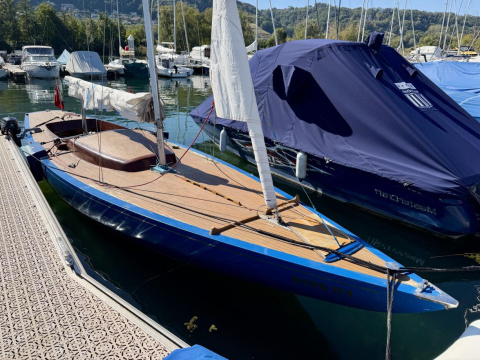
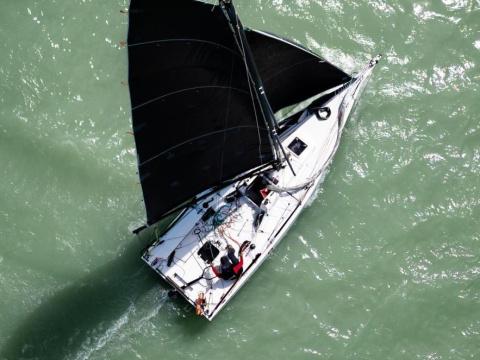
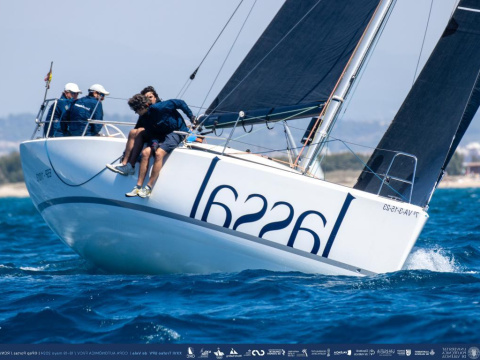
Racing boats are boats designed or modified for optimal performance under racing conditions. There are dedicated racing boat classes (from the Optimist as a junior boat, through the 4.20 m Laser, to the AC 75 America's Cup boat costing 150 million euros), but boats originally designed for cruising are also frequently "pimped" into racing boats (such as the Zugvogel, the Dragon or the Folkboat). In most cases, racing boats are equipped with a wide range of trimming systems and (for weight reasons alone) do without any comfort on board.
Content
What is a racing boat?
In principle, you can race with any sailboat and any boat class (e.g. under the Yardstick system). But true racing sailors can only smile politely at such truisms. Because racing boats should be fast, powerful and competitive in every respect. These are demands that can only be met by boats designed specifically for racing.
Features of racing boats and racing yachts
Racing boats come in all sizes and variants. They are characterized by (varying degrees of) athletic demands on skipper and crew. Compared to the hull length, the sail area of racing boats is usually disproportionately large (over-canvassed), and upwind the righting moment has to be generated by hiking, trapeze or by using technical ballast or, for example, a canting keel. Downwind or on reaching courses, racing boats usually sail with additional special sails such as a spinnaker, gennaker or genoa.
In most cases, racing boats are equipped with a wide range of trimming systems and do without any comfort on board (not least to save weight).
Boat24 distinguishes between two broad categories: racing dinghies and racing yachts.
Racing dinghies
Well-known racing dinghies today include Olympic classes such as the Laser singlehanded dinghy, the 470 two-person boat, the 49er skiff and the Nacra 17 catamaran, which sails on foils in the mixed category at the Olympic sailing events. Older international classes such as the 505, Flying Dutchman, Europe, Finn, 420 or Hobie Cat have also achieved worldwide popularity.
Racing yachts
Racing yachts are racing boats with a keel (with or without a cabin) that are sailed either on classic windward-leeward courses on inland lakes and coastal waters or in offshore races (e.g. transatlantic races, Transpac or round-the-world races).
Examples include the J70 (used at Europe-wide sailing league and Champions League events), while for offshore racing the Mini 6.50, X-99, Class 40 or the 60-foot foilers of the IMOCA class are well known.
Racing boats are available as one-design and as development classes in many sizes and designs.
In addition, the sailing federations divide them into international, national and regional boat classes. A boat class as defined by the International Sailing Federation (ISAF) can be used in sporting competition in accordance with the "Racing Rules of Sailing" developed and published by the ISAF. You can find lists of the relevant boat classes on the ISAF website.
One Design – what's that about?
One Design means that the boats are built to a construction plan laid down in advance in the class rules. As a result, the boats are almost identical in construction – even if they were built at different yards – and in a race it is primarily the skill of the sailors that counts. Before important regattas the boats are measured to make sure that the boats in a one-design class really do line up on equal terms.
Typical one-design classes are the Laser sailing dinghy, the Melges 40 yacht, the Soling, the Dragon, the J/70 and the Mini 6.50.
The counterpart – the development class
Development classes give the designer maximum design freedom within a minimal set of limits. This means the designer of a development-class racing boat has a major share in victory or defeat. Depending on the type of boat, the hull shapes, appendages (keel/foils/centreboard) and rigs within development classes can be designed to taste. What is usually prescribed within a development class are the hull dimensions, the maximum sail area and the minimum displacement.
The development classes among racing dinghies are also known as tinkerers' classes, since the sailors on these boats usually lend a hand themselves and give free rein to their technical innovations.
Well-known development classes (racing boats)
Well-known development classes in Europe are the Moth (with foils), the A-Cat and the dinghy cruiser (P-boat). The most famous development class of all, however, is provided every four years by the America's Cup teams, who with budgets running into the hundreds of millions each time define the new state of the art in sailing.
Racing – and nothing else!
Features of racing boats:
- Trimmed for maximum performance.
- SPORT is written in capital letters.
- Especially popular among dinghies.
- With all the different classes, there's plenty of choice for every taste, every age and every type of sailor.
- A distinction is made between one-design and development classes (see above).
Who should buy a racing boat?
- Athletes! And anyone who wants to become one.
- Classic and modern racing boats demand sport at the highest level – whether on a single-handed trapeze dinghy or as part of the crew on an offshore racing yacht!
- It always comes down to the sailors! Even in development classes with a high material budget!
- Regatta sailing is like playing chess and pumping iron at the same time, out on the water.
- Used racing boats are increasingly sailed after their regatta career as pure "speed machines" for fast sailing on home waters!
- If you want to race – no matter the class – you need plenty of time: long tows with the trailer (to dinghy regattas) or weeks-long offshore regattas followed by the journey home call for understanding employers.
- A certain financial cushion wouldn't hurt either: anyone who races could just as well tear up 100-euro notes in the shower – with the same result!