
Looking to buy a houseboat? Find your perfect houseboat at Boat24. Everything you need to know about houseboats, floating houses and floating homes.
Continue readingHouseboats for Sale
Houseboats, floating houses and floating homes for sale now (used or new)
Refine results
Current listings
- Favourite
- NEW
Houseboat
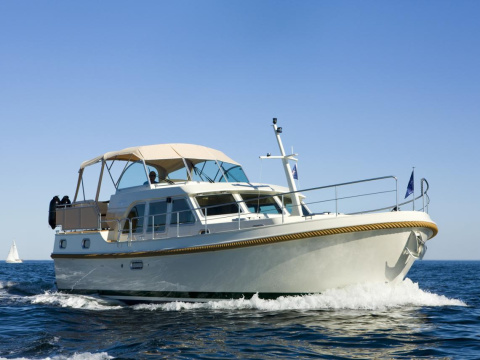
Linssen Grand Sturdy 40.9
a dream of a boat
- 12,85 x 4,30 mDimensions
- 110 hpEngine power
Germany » Brandenburg » Zehdenick
- Favourite
- NEW
Houseboat
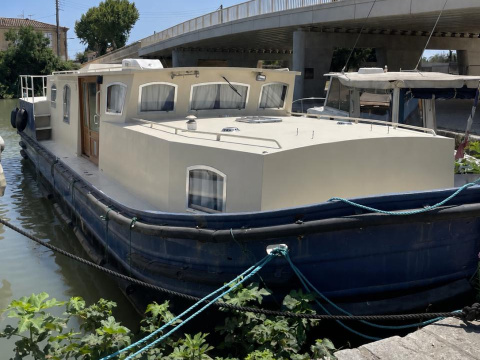
Southwest Durham Steelcraft Péniche Euroclassic 139 GC
Very well maintained - 2 double cabins
- 13,72 x 4,12 mDimensions
- 70 hpEngine power
France » Occitanie » Saint Gilles (30)
- Favourite
- NEW
Houseboat
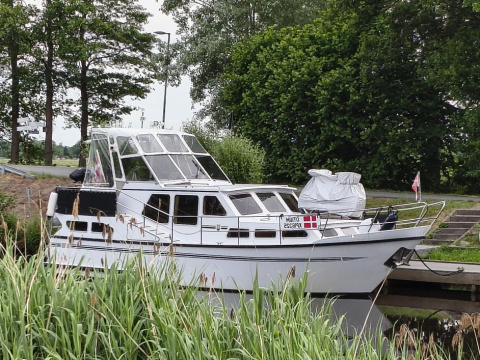
Pedro 37
Steel Motorboat—In Excellent Condition and Well-Maintained—with ONLY 1,000 hours
- 11,10 x 3,40 mDimensions
- 135 hpEngine power
Netherlands » Fryslân » Sneek
- Favourite
- Favourite
Houseboat
Greenline 33 Hybrid
- 9,99 x 3,49 mDimensions
- 2 x 150 hpEngine power
Switzerland » Lake Geneva » La Pichette


From houseboats and floating houses to floating homes
Cruise calmly and slowly from bay to bay, from harbor to harbor – in your own home. On a floating home, you simply get to "live differently". Swim against the current, even while drifting right along in the middle of it. Just like with a camper van, why not take your houseboat along on the journey!
Content
Houseboat versus floating house
Terms that often get mixed up: a houseboat is a motor-powered vessel in which you can live fairly comfortably. Houseboats move rather slowly across lakes, rivers and canals from one berth to the next. They are frequently compared to campervans on land and are enjoying growing popularity (both ownership and charter) – modern nomadic life on the water, mainly during vacation periods.
A floating house, on the other hand, stays at a permanent berth on the water (alongside moles, quay walls or jetties) and is at most towed or moved to a shipyard for repair work. To gain extra living space, the engine is removed from large floating houses (such as converted inland barges or similar).
What does a houseboat cost?
Depending on size, equipment and technology, the purchase costs for a houseboat vary widely. New houseboats with a living area of roughly 30 to 90 sq m cost between 100,000 and 450,000 euros.
Used houseboats, much like other used boats, are considerably cheaper to buy depending on age, equipment and overall condition. Here too, however, any maintenance and repair work that may be required should be factored into the purchase price. On Boat24, houseboats are available from around 25,000 euros.
Do you have to pay for a berth on the water?
One thing is clear: when it comes to money, the much-praised "freedom of life on a houseboat or floating house" comes to an end. Just like sailboats or powerboats, houseboats have to pay fees for their berth to the local authorities, even if they are often on the move.
This naturally also applies to floating houses that lie permanently at anchor or at a jetty.
Berth prices vary depending on the municipality in charge. In some regions – depending on the location of the berth – 2,000 euros per year are due. In more popular areas, 8,000 to 12,000 per year can be charged.
The nomads among houseboat enthusiasts are charged daily rates at their respective berths – much as in a marina.
Where are you allowed to live on a houseboat or floating house?
Almost every European country has its own legal rules, and these can differ considerably.
In Switzerland, for example, "vessels used for residential purposes are prohibited". A vessel for residential purposes is defined there as a vessel that can be used for permanent living on board, is inhabited, and stays in the same place for longer than two months or keeps returning to it.
In Germany, France, Belgium, the Netherlands, Austria and Scandinavia, the individual countries and/or municipalities set the rules for living on houseboats and floating houses. For "mobile" houseboats, short-term designated berths are available on almost all waterways and many lakes – mainly during the holiday season.
Things can get tricky, however, in some regions and larger cities with waterways and lakes when it comes to allocating permanent berths. In Berlin, for instance, owners of houseboats and floating houses are frequently faced with a "general houseboat ban" – on Lake Wannsee, for example. Water sports clubs are fighting this in court as well, because the ban also covers "sleeping on boats in the harbor".
In Hamburg, Cologne, Duisburg and Leipzig, living on a boat is possible at designated locations – provided you can afford the drastically increased berth or land costs. In addition, floating houses longer than 25 m, or floating homes (see below), require water plots that are allocated through complex permit procedures.
The Netherlands is still the "El Dorado" for houseboats and floating houses. But here, too, berth costs are rising sharply because of the general shortage of housing.
Floating home – your own home on the water
A floating home is, as the name suggests, a house built on a floating pontoon that usually lies permanently moored at a berth on the water. Today, floating homes are seen as a trendy, alternative form of living space. That is why large cities with rivers and canals running through them are starting to group floating homes into genuine residential neighborhoods on the water. Amsterdam is a prime example, where large "floating" neighborhoods have already been created.
Buying a houseboat. What to look out for when buying a houseboat?
- When buying a used houseboat abroad: Where will the boat be used? Is a boat of this length with this engine power even allowed to operate there? Check: Is VAT stated or not? Does the boat have a CE certificate?
- Inspect the houseboat's machinery just as carefully as you would the engine when buying a used powerboat.
- With the living area, galley and wet rooms – much like in a camper van – pay attention to functionality.
Who should buy a houseboat?
A houseboat is just right for you if you
- want to cruise along rivers, canals and inland lakes with your family on vacation,
- are looking for your own personal freedom without having to sail around the world,
- have seen and done it all in a camper van and now want to explore the waterways,
- want to take a slightly different kind of time out on the water.
 Locaboat